According to studies from the Environmental Protection Agency (EPA), people spend 90% of their time indoors, where pollution can be 2-5 times higher than outdoors. The use of chemicals in synthetic building materials, personal care products, furnishings, pesticides, and household cleaners has driven an alarming increase in toxic air particles in the home.
At Ensign, we rely on technology to detect and identify toxins in your home. Established on the principles of Building Science, we create an individualized plan to mitigate your home and help you prevent future issues with Indoor Air Quality.
Air quality testing is an essential component of a comprehensive strategy for addressing indoor air quality issues in a home. Although it is not always an exact science due to factors like fluctuating pollutant levels and testing limitations, it offers critical insights into potential concerns such as mold, allergens, volatile organic compounds (VOCs), and particulate matter. By integrating testing results with our certified inspections and expertise in Building Science, we develop a holistic approach that includes proper ventilation, humidity control, and source management. This allows us to effectively identify and resolve indoor air quality problems, fostering a healthier and more comfortable living environment.
Ensign Building Solutions is Your Trusted Leader in Indoor Air Quality Testing and Solutions

Indoor air quality is affected by a combination of factors, including excess humidity, airborne contaminants like radon and mold spores, volatile organic compounds (VOCs) released from building materials and household products, and inadequate ventilation. Because modern homes are built tighter for energy efficiency, pollutants and moisture can become trapped indoors without a proper ventilation strategy to exchange stale air for fresh air.
Excess humidity inside a home creates the moisture mold needs to grow, and can also make airborne pollutants and allergens linger longer in the air. Keeping relative humidity below 65% helps prevent conditions that are conducive to mold growth and generally makes a home's air feel fresher and healthier to breathe.
An ERV, or Energy Recovery Ventilator, continuously exchanges stale indoor air for fresh outdoor air while recovering the energy from the outgoing air to precondition the incoming air. This allows a tightly sealed, energy-efficient home to maintain healthy air exchange without a big spike in heating and cooling costs, supporting Ensign's approach to "build it tight, and ventilate it right."
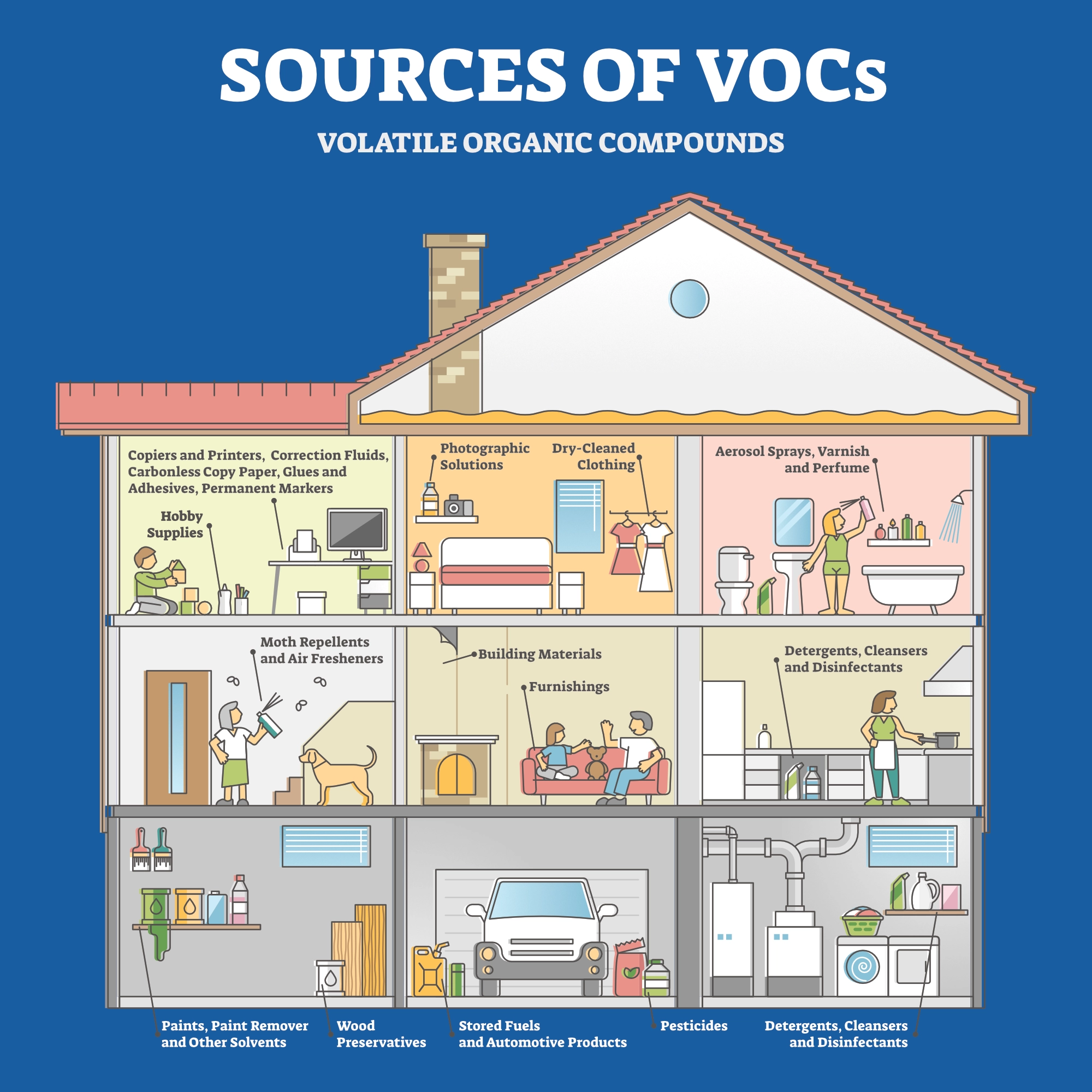
VOCs, or volatile organic compounds, are chemicals that off-gas from everyday sources like paint, furniture, cleaning products, and building materials. At elevated concentrations, VOCs can cause headaches, eye and throat irritation, and other health effects, and because they build up more easily in tightly sealed homes, proper ventilation and air quality testing are important for keeping VOC levels in check.
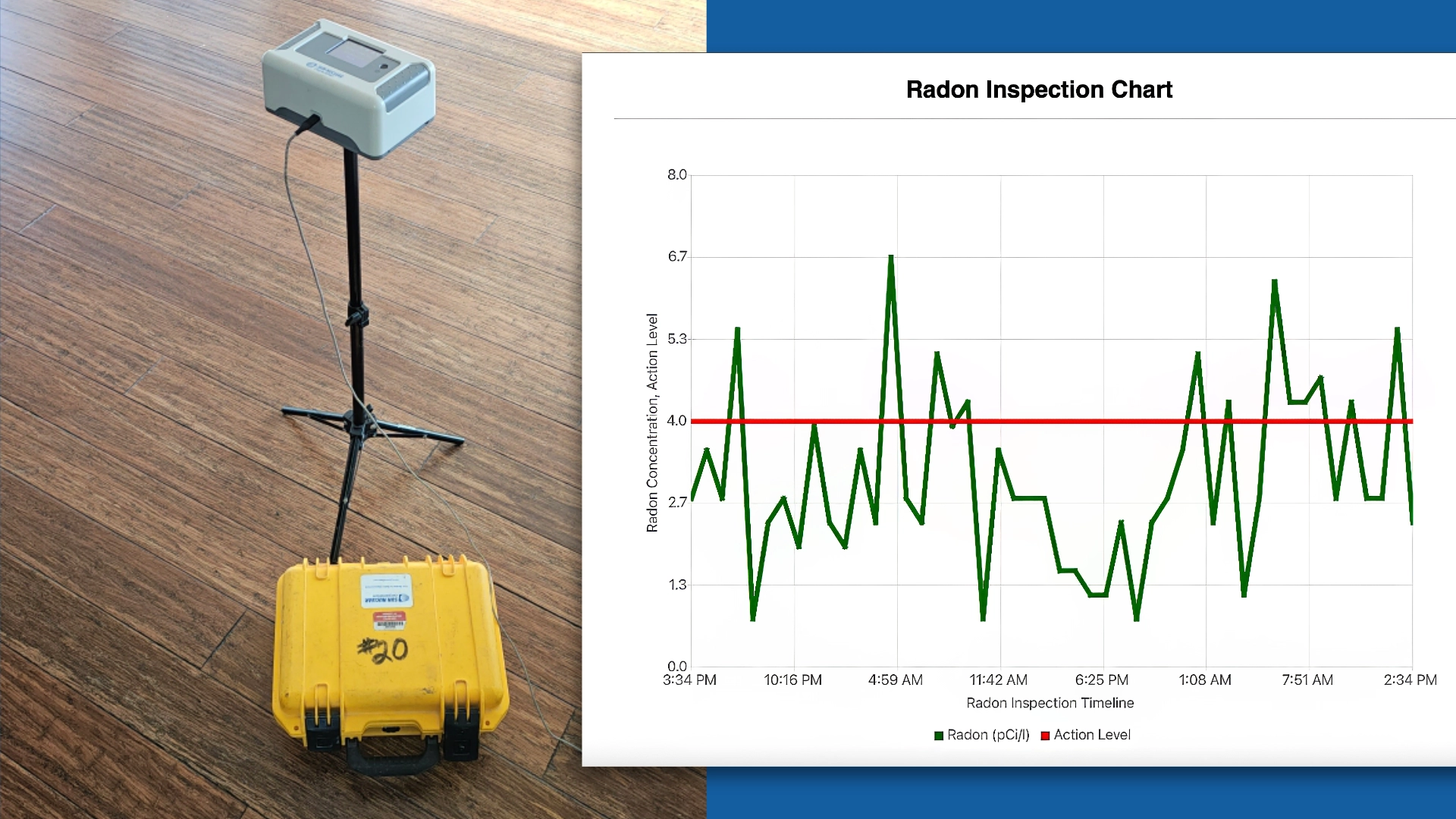
Common signs include stale or musty odors, visible mold growth, excess condensation on windows, and household members experiencing allergy-like symptoms, headaches, or fatigue while at home. Because many pollutants like radon and VOCs are undetectable to the human senses, professional indoor air quality testing is the only reliable way to know what's really in your home's air.
Yes. Radon is a radioactive gas that seeps in from the soil beneath a home and is a leading cause of lung cancer, while mold spores are microscopic and become a health concern when moisture allows them to grow and spread indoors. Both are common contributors to poor indoor air quality, and both require dedicated testing and mitigation, which is why Ensign addresses radon, mold, and general air quality together as part of a whole-home approach.
Call to Schedule an assessment with one of our certified experts.
770-205-9891
Fill out our contact form and we will reply back within 24 hours.
Leave a detailed message on our contact form.